The automatic transmission is one of the most complex and critical systems in a vehicle. It depends on transmission fluid, hydraulic pressure, electronic solenoids, and precisely machined internal parts to deliver smooth, consistent gear changes.
If a transmission begins shifting harshly, hesitates when engaging a gear, slips between gears, or behaves unpredictably, the valve body may be part of the problem. In this service, we remove and inspect the automatic transmission valve body assembly to assess its condition and identify possible causes of those symptoms.
What Is the Transmission Valve Body?
The valve body is often described as the hydraulic control center of an automatic transmission. It contains a network of fluid passages, valves, check balls, and solenoids that regulate the flow and pressure of transmission fluid.
Based on signals from the vehicle’s control system, the valve body routes hydraulic pressure to the appropriate clutch packs and internal components. This allows the transmission to engage and shift gears at the proper time.
Because the passages and clearances inside the valve body are extremely precise, contaminated fluid, metal particles, varnish buildup, or internal wear can affect how it operates.
Removing and Inspecting the Transmission Oil Pan
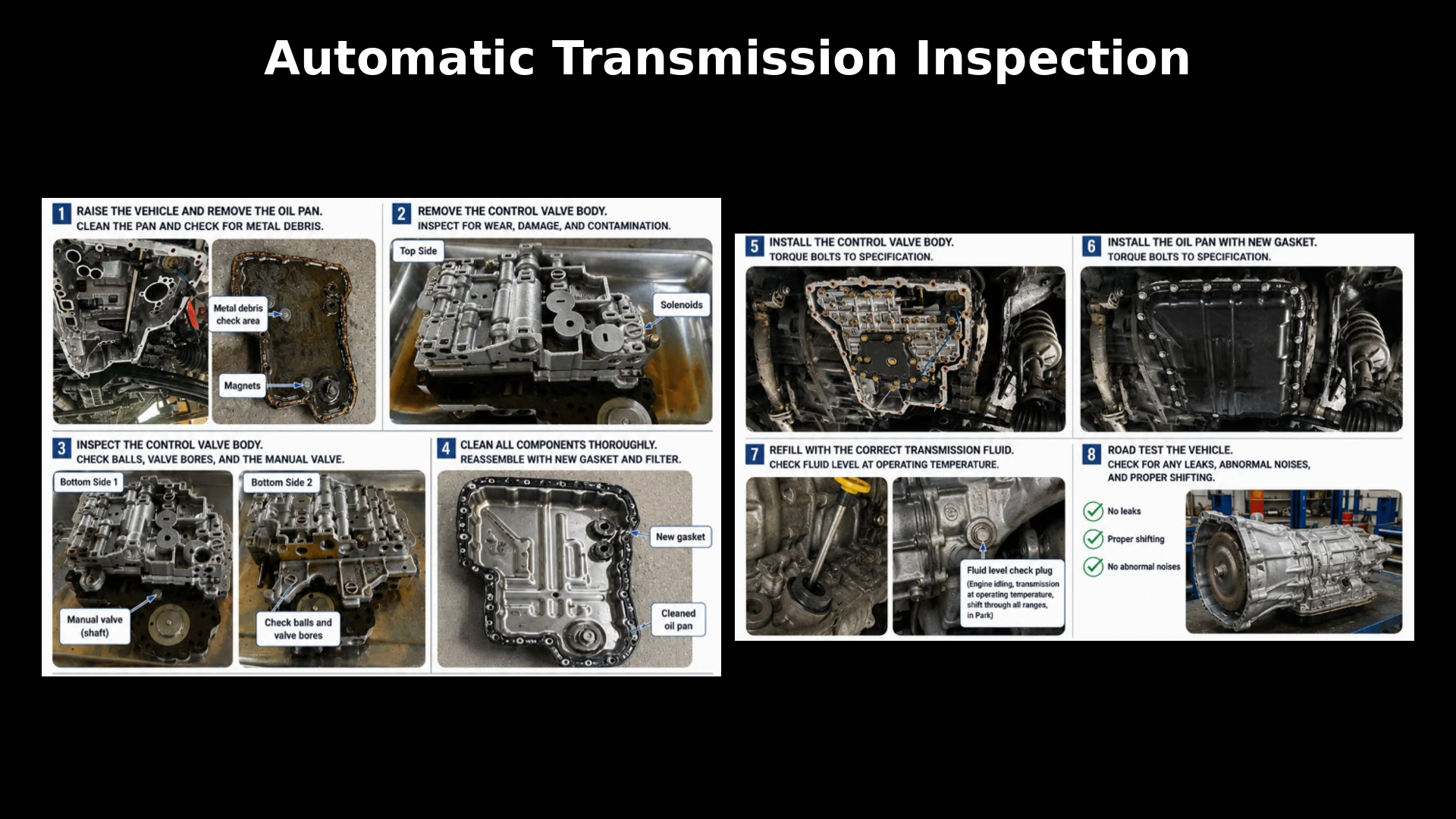
The first step in the inspection is to remove the transmission oil pan and examine the condition of the fluid.
The oil pan can reveal a great deal about the transmission’s internal condition. We inspect it for:
• Metal particles or excessive debris
• Friction material from internal clutch components
• Discolored or contaminated transmission fluid
• Unusual odors that may indicate overheating
• Excessive material collected on the magnets
A small amount of fine metallic material on the magnets can be normal. Large particles, heavy deposits, or excessive friction material, however, may point to a more serious internal issue.
After the inspection, the oil pan and magnets are thoroughly cleaned before reassembly.
Valve Body Inspection
Once the oil pan has been removed, the valve body can be accessed and carefully removed from the transmission.
At this stage, we inspect the valve body for contamination, wear, damage, and restricted fluid passages. Depending on the transmission design and the symptoms reported, the inspection may include:
• Shift solenoids and pressure-control solenoids
• Manual valve and selector mechanism
• Check balls and separator plates
• Valve bores and hydraulic passages
• Internal wiring and electrical connectors
• Gaskets, seals, and mating surfaces
• Signs of corrosion, overheating, or abnormal wear
All bolts and small components must remain in their correct locations, as different bolts may have different lengths and functions. Reassembly must follow the correct procedure and torque specifications.
Inspecting the Valve Body Mounting Area
With the valve body removed, we also inspect the mounting area inside the transmission.
We check the exposed surfaces and fluid passages for foreign material, damaged threads, irregular wear, and signs of leakage. The mating surfaces must be clean and free of old gasket material before the valve body is reinstalled.
Cleanliness is especially important during automatic transmission work. Even a small amount of dirt or lint can enter a hydraulic passage and affect valve or solenoid operation.
Cleaning and Reassembly
Once the inspection is complete, any reusable components are carefully cleaned. Any necessary gaskets, seals, or filters are replaced before reassembly.
The valve body is then installed in the correct position, and the bolts are tightened in the specified sequence to the manufacturer’s torque specification. Incorrect bolt placement or overtightening can damage the valve body or affect its alignment.
The transmission oil pan is refitted with the appropriate gasket or sealant, in line with the manufacturer’s procedure.
Refilling and Checking the Transmission Fluid
The transmission must be refilled with the correct type of automatic transmission fluid. Using the wrong fluid can lead to shifting problems, poor lubrication, overheating, or internal damage.
The fluid level is checked using the procedure specified for the vehicle. On many modern transmissions, the level must be checked with the engine running, the vehicle level, and the transmission at a specified operating temperature.
After refilling, we inspect the transmission for leaks and confirm that the selector and related transmission controls operate correctly.
Final Road Test
The final step is a road test.
During the road test, we check:
• Drive and Reverse engagement
• Shift timing and shift quality
• Harsh, delayed, or irregular gear changes
• Transmission slip or engine-speed flare
• Unusual noises or vibration
• Warning lights or diagnostic trouble codes
• Fluid leaks after the transmission reaches operating temperature
The road test helps confirm that the transmission is operating properly after the inspection and service.
Signs Your Automatic Transmission May Need Inspection
A transmission inspection may be recommended if a vehicle shows symptoms such as:
• Delayed engagement when selecting Drive or Reverse
• Harsh or sudden gear changes
• Slipping between gears
• Gear changes that occur too early or too late
• Transmission warning lights
• Fluid leaks under the vehicle
• Burnt, dark, or contaminated transmission fluid
• Unusual noises during acceleration or shifting
• Reduced performance or inconsistent transmission operation
These symptoms do not always mean the transmission needs to be replaced. The cause may be related to fluid condition, electrical controls, solenoids, the valve body, or another component. Proper diagnosis is essential before deciding on the right repair.
Professional Automatic Transmission Inspection
Automatic transmission work requires careful inspection, correct procedures, and a clean working environment. By examining the oil pan, transmission fluid, valve body, solenoids, and mounting area, we can gather important information about the condition of the transmission.
If you are considering buying a Nissan Rasheen imported from Japan to the United States, the condition of the automatic transmission is one of the areas that deserves close attention. Inspecting the valve body, fluid condition, and related internal components helps us better understand how the transmission has been maintained and what service may be needed before the vehicle is prepared for export.
At Rasheenkan, inspections like this are part of how we evaluate, restore, and prepare Rasheens for customers in the United States. For buyers looking for a well-prepared Rasheen with the character and quality the model is known for, careful mechanical assessment is an important part of the process before the vehicle leaves Japan.