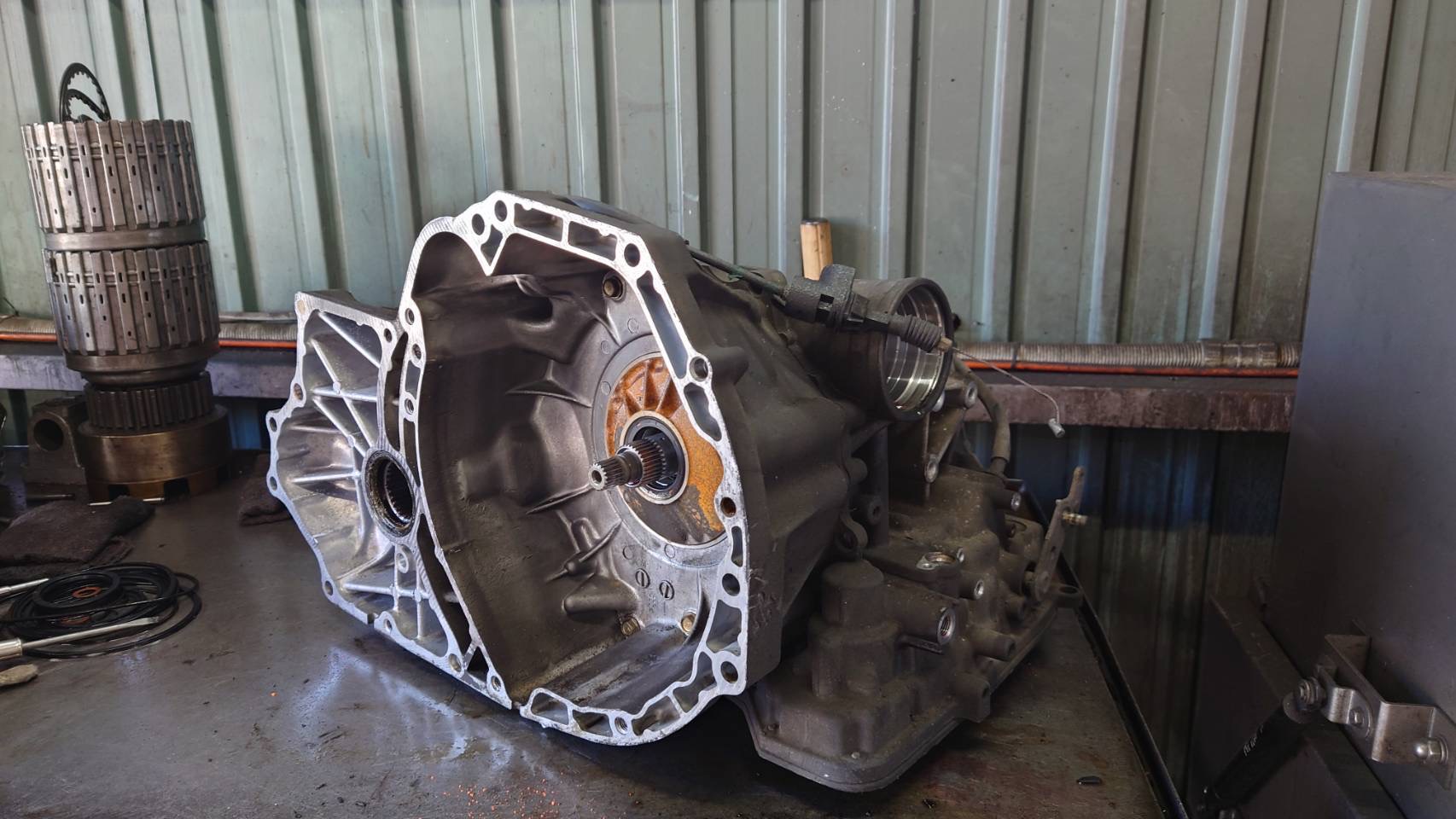
Inside a Nissan Rasheen Automatic Transmission Overhaul Preparing a 25-Year-Old JDM Vehicle for the Road Ahead
A restored Nissan Rasheen should not only look beautiful.
It should start, drive, shift and stop with the confidence expected from a properly prepared vehicle.
For many classic vehicles, the automatic transmission is one of the most important—and most frequently overlooked—parts of a restoration.
Fresh paint and a new interior are immediately visible. The condition inside an aging transmission is not.
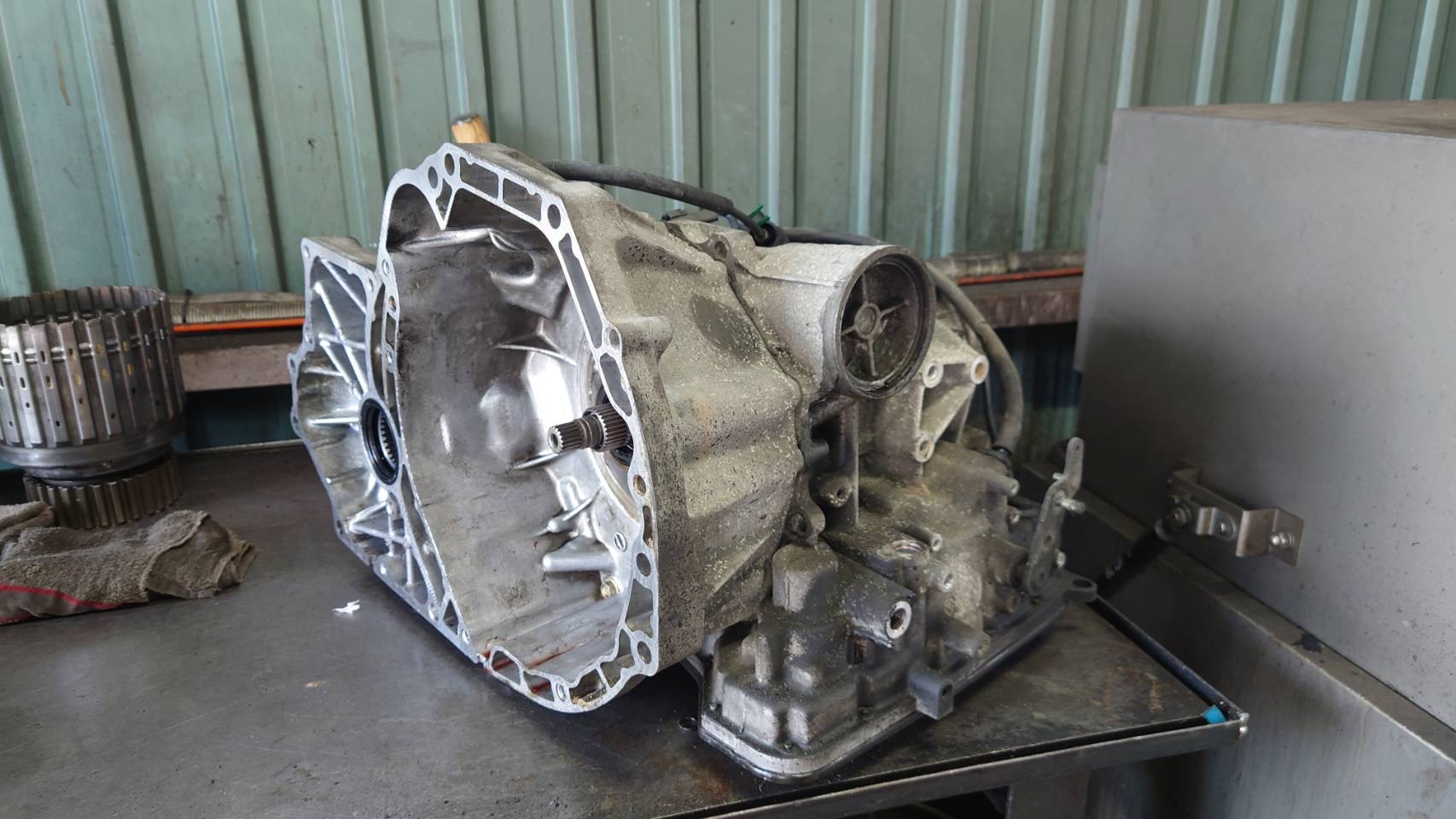
That is why our restoration work can go far beyond replacing the transmission fluid or installing another used transmission with an unknown history.
When the condition of a vehicle requires it, the automatic transmission is removed, opened and inspected internally.
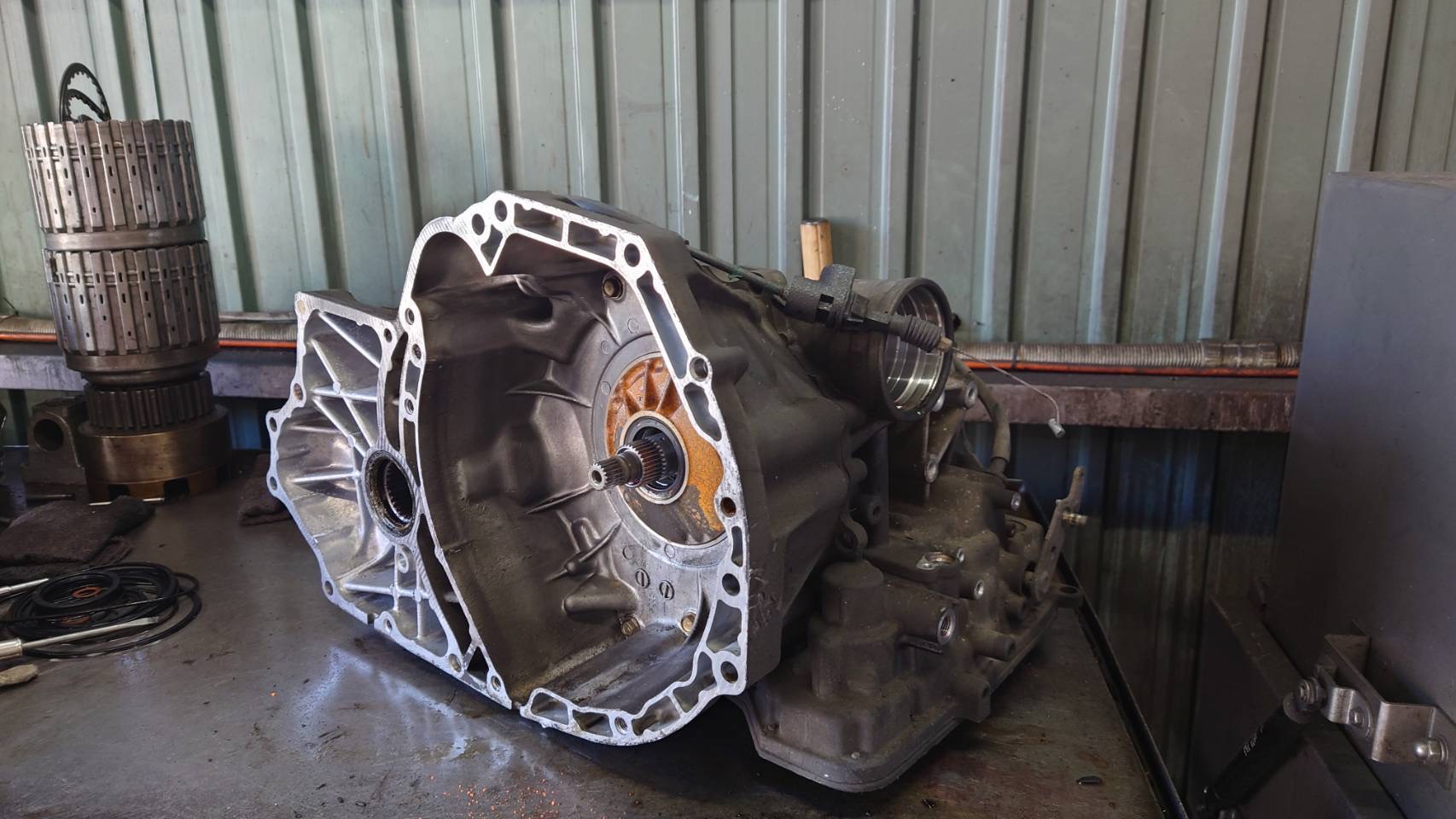
Why the Transmission Must Be Inspected Internally
A Nissan Rasheen may still move and shift even when internal wear has already begun.
A short test drive alone cannot reveal the complete condition of the:
* Friction discs
* Steel plates
* Internal seals
* Bearings
* Gear train
* Oil passages
* Valve body
* Differential and final-drive components
The Nissan Rasheen was produced from the 1990s through 2000. Every surviving example is now an aging vehicle.
Even a relatively low-mileage Rasheen may have hardened seals, worn friction materials or contamination inside its transmission.
If the goal is long-term ownership, the mechanical condition must be judged from actual evidence—not guesswork.
Opening the Transmission Case
After the transmission is removed from the vehicle, the exterior case and mounting areas are inspected.
The oil pan and lower transmission components are then removed.
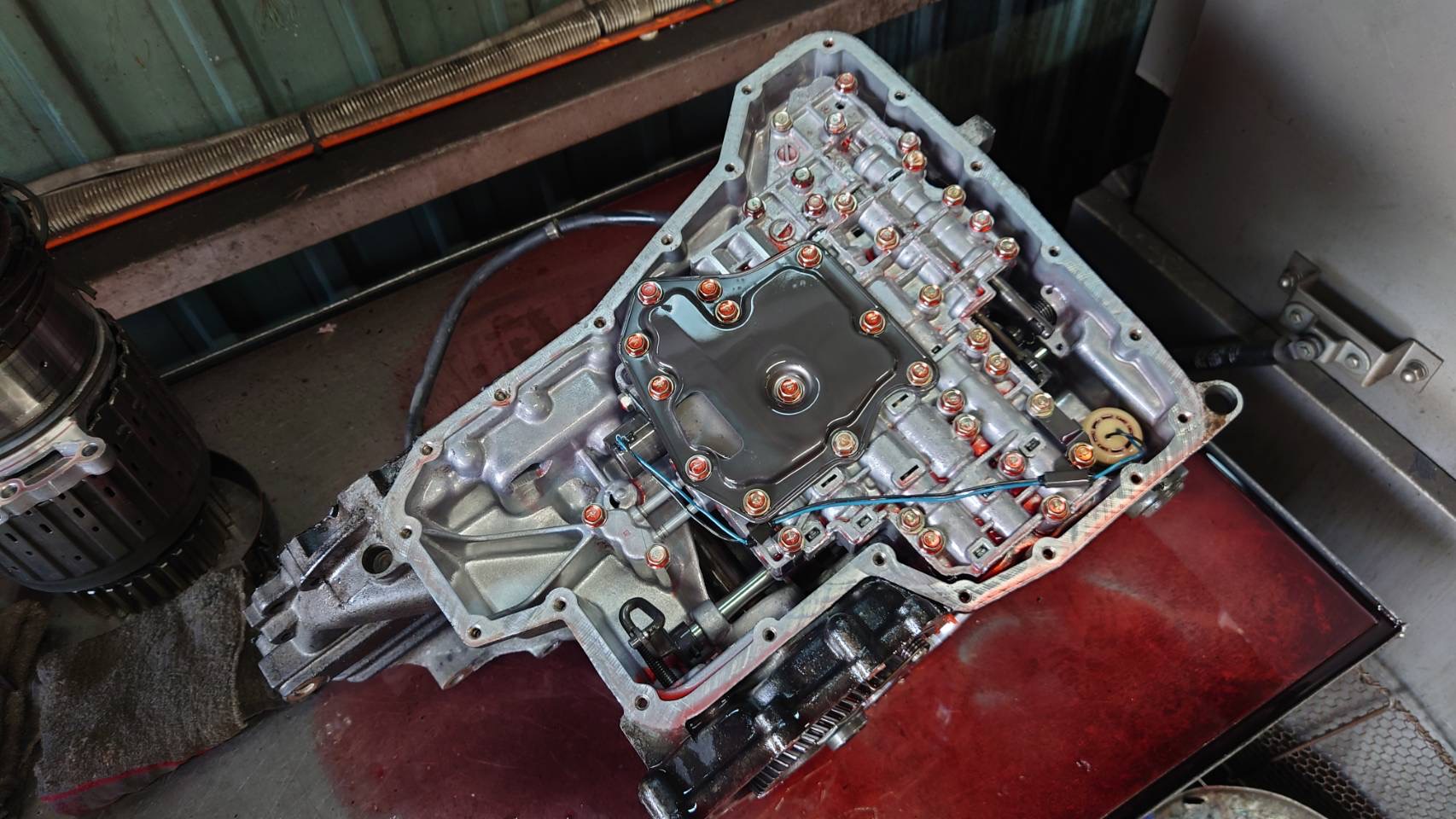
This provides access to the valve body, hydraulic circuits and internal oil passages.
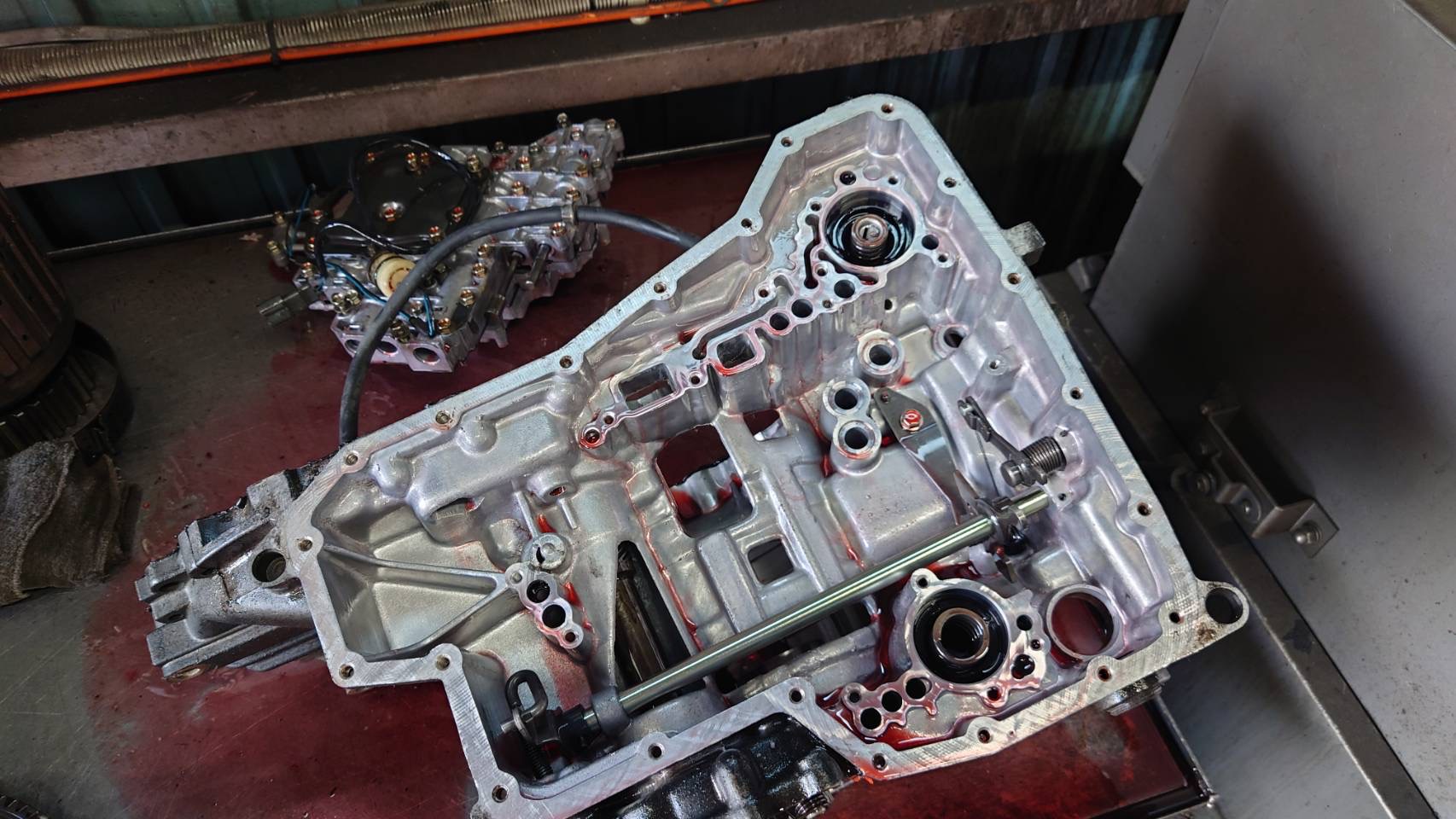
The condition of the transmission fluid and any deposits found inside the case can provide important information about internal wear.
The Valve Body: The Hydraulic Control Center
The valve body controls the movement of transmission fluid through a complicated network of passages.
It determines when and how the automatic transmission changes gears.
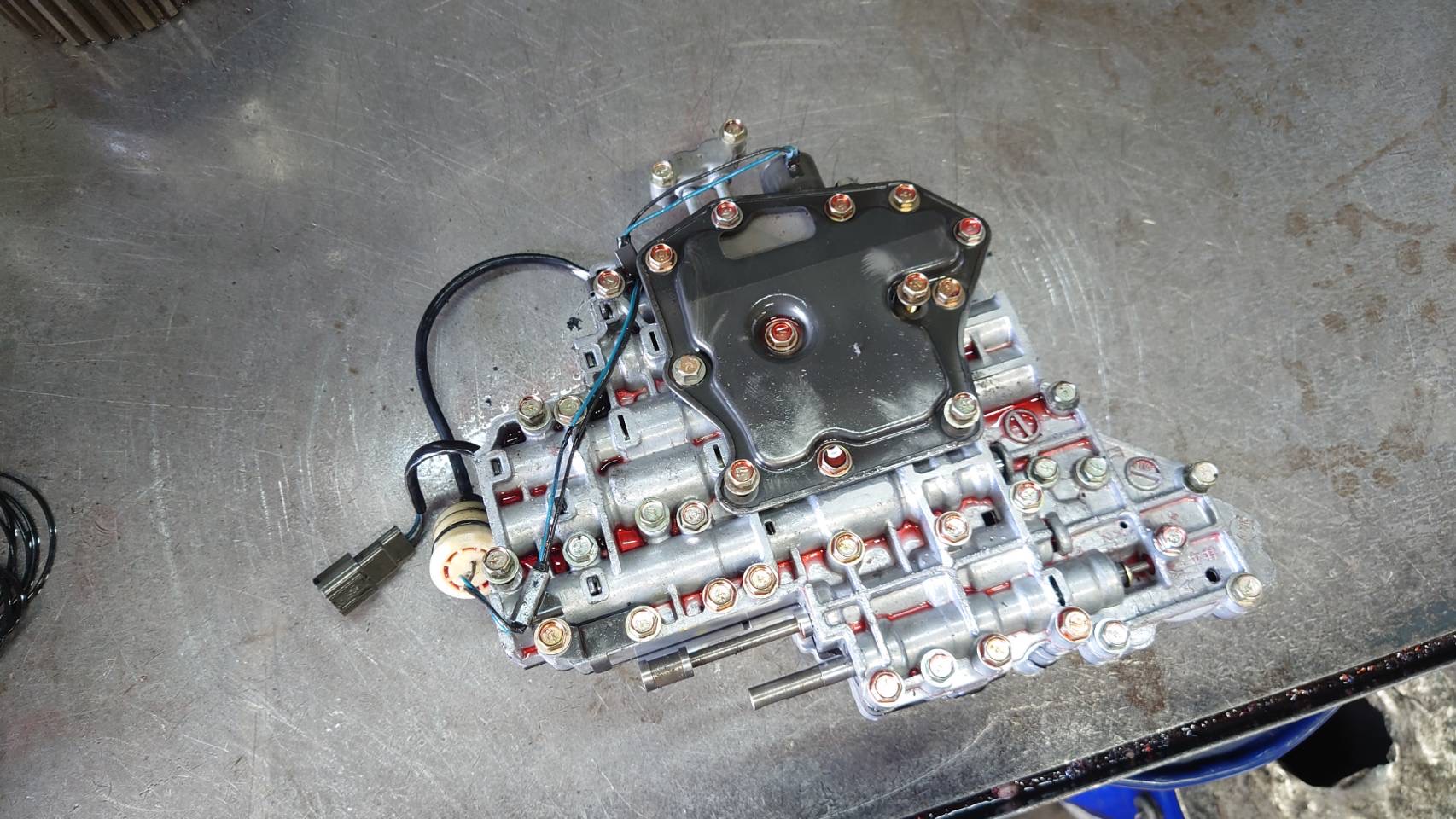
Contamination, wear or problems inside these hydraulic circuits may cause:
* Delayed engagement
* Shift shock
* Slipping
* Incorrect shift timing
* Inconsistent transmission operation
The valve body must therefore be removed and checked carefully.
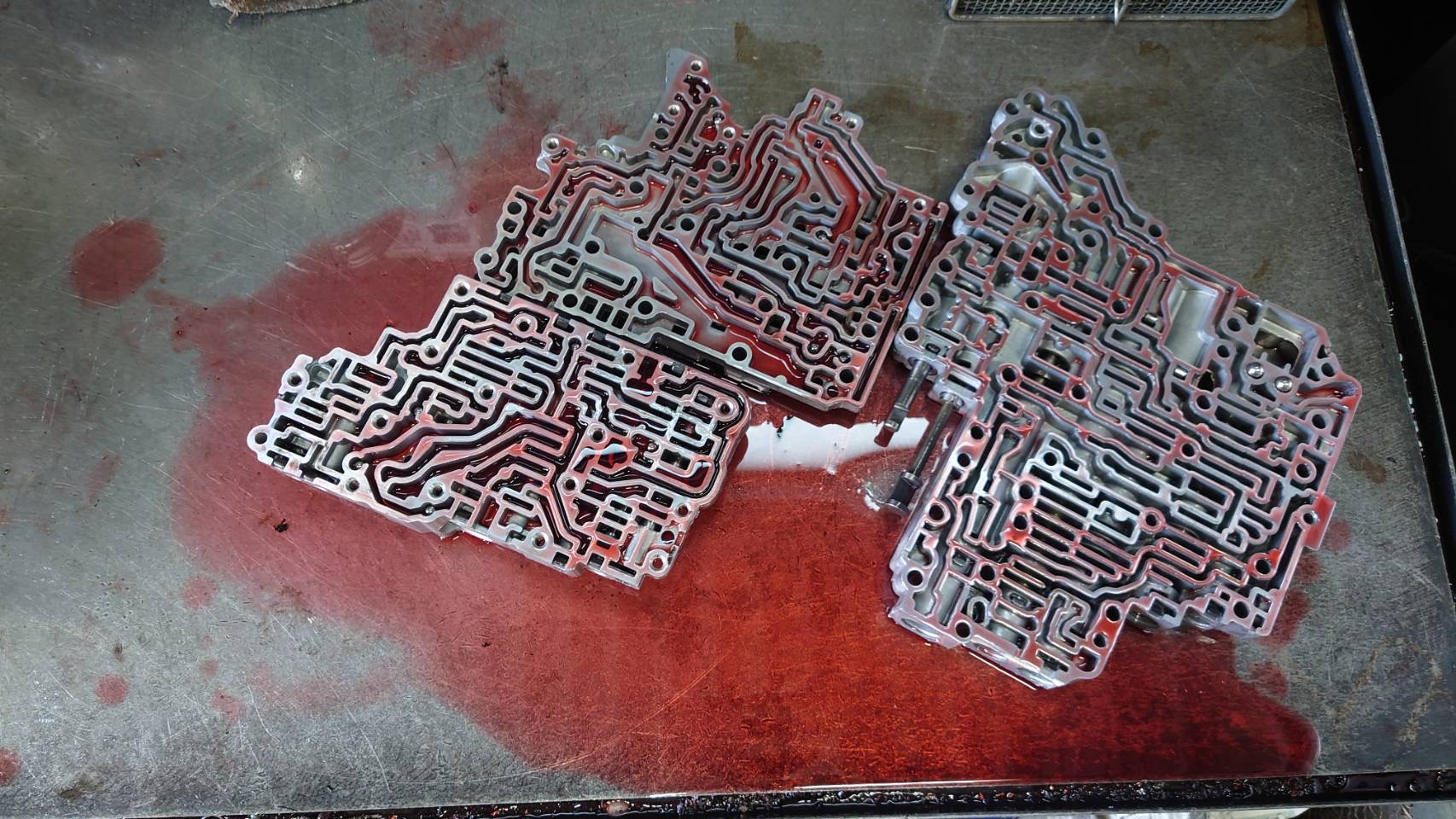
The separator plates show how complicated the internal hydraulic system really is.
This work cannot be completed properly by simply cleaning the outside of the transmission.
Inspecting the Clutch Packs
An automatic transmission contains multiple clutch packs.
These clutch packs engage and release to transfer power through the different gear ranges.
Each pack contains friction discs and steel plates.
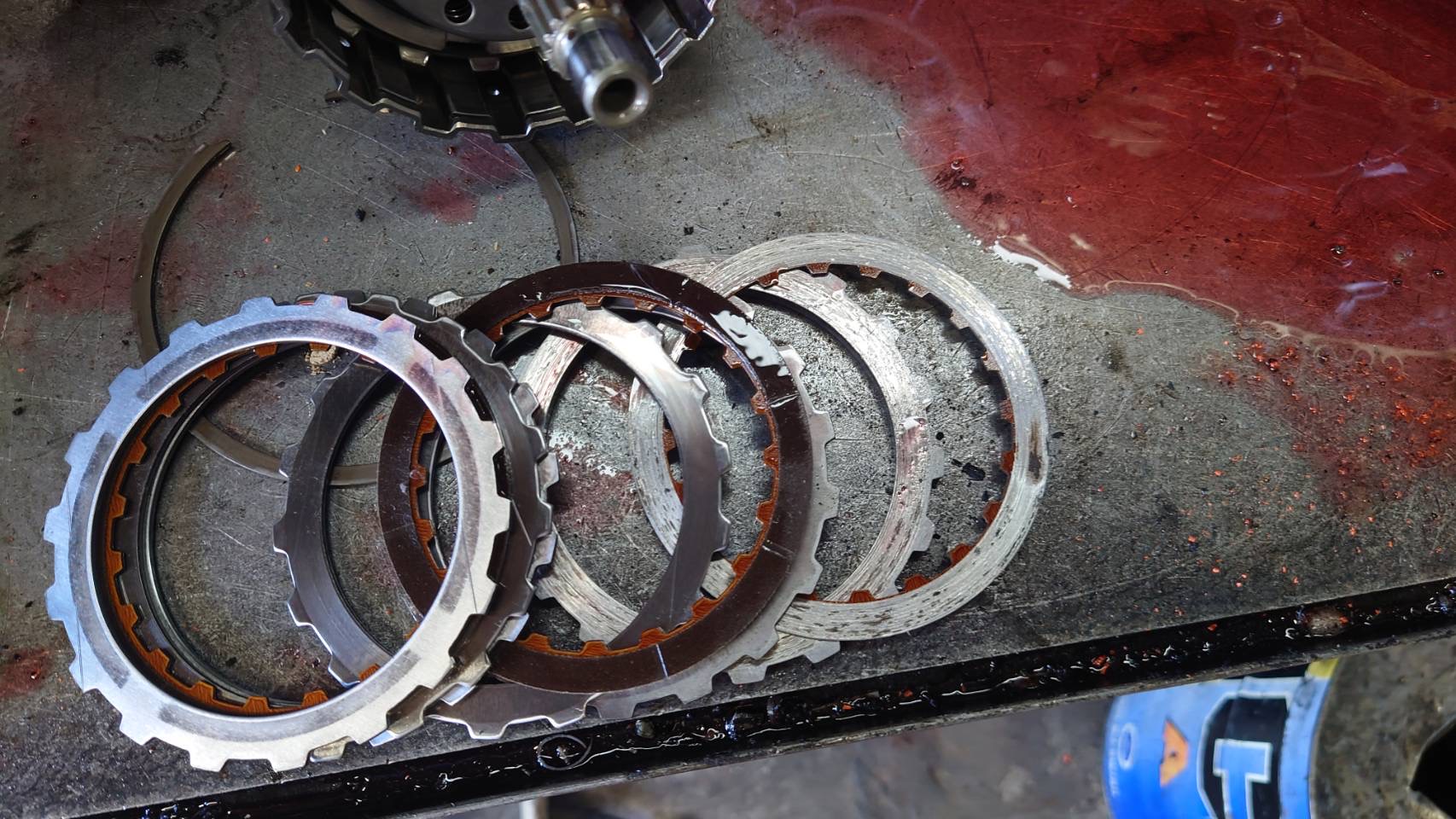
Their condition directly affects the transmission’s ability to engage correctly and hold power without slipping.
After disassembly, each plate can be checked for:
* Friction material wear
* Glazing
* Heat damage
* Distortion
* Discoloration
* Uneven contact patterns
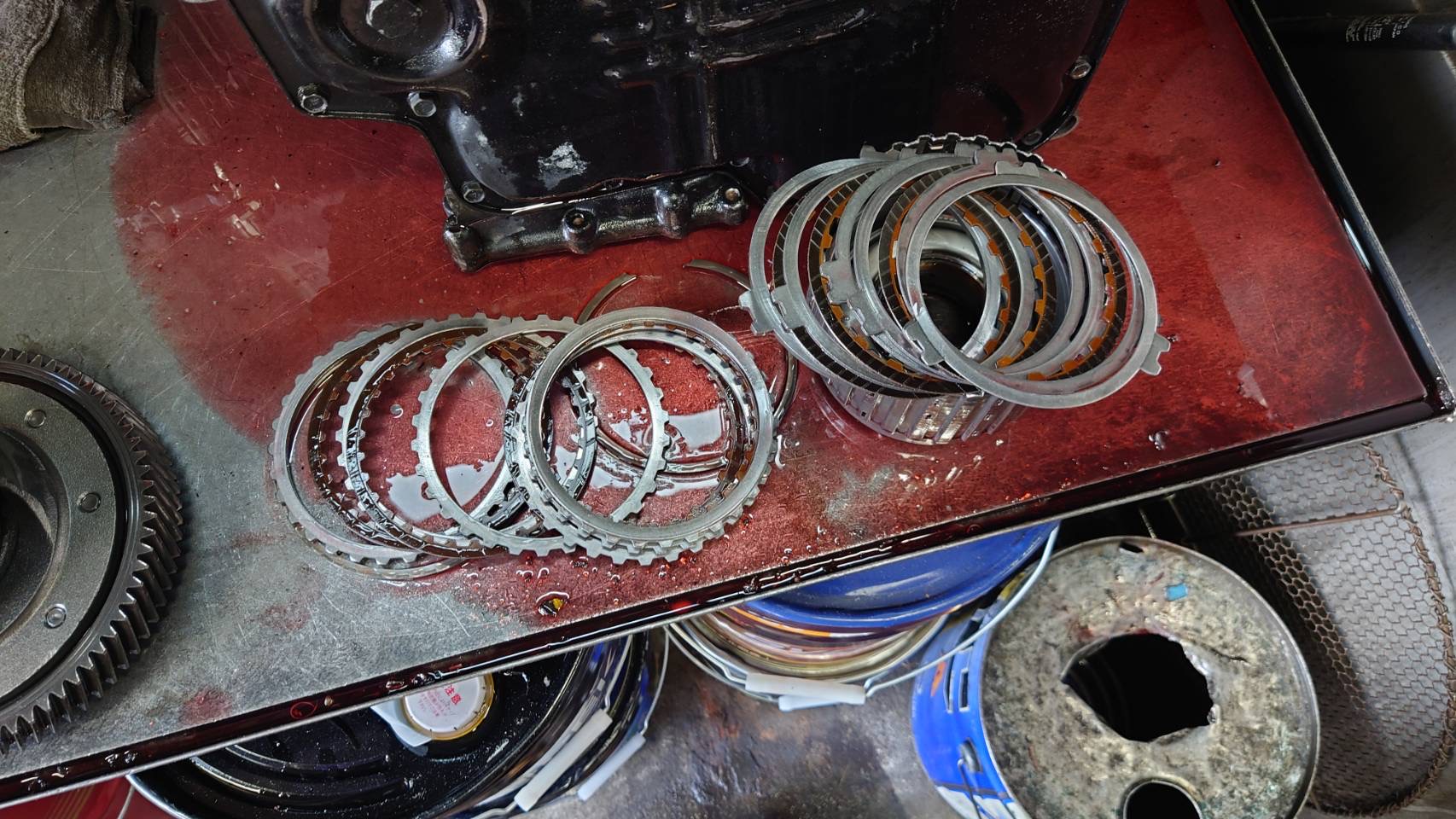
A transmission fluid change cannot repair worn friction materials.
The internal components must be removed before their actual condition can be determined.
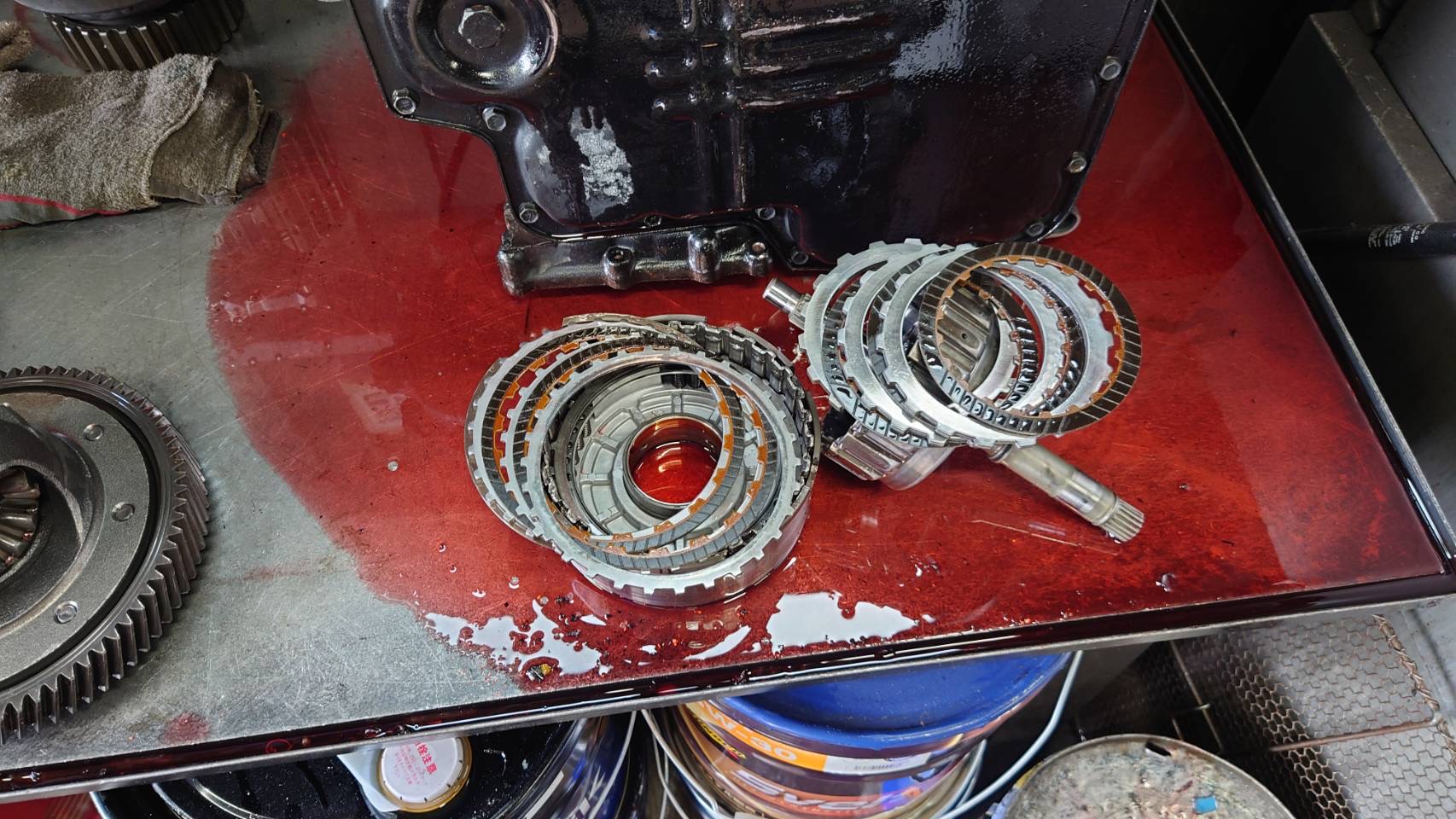
Gear Train, Drums and Internal Shafts
The inspection continues deeper into the transmission.
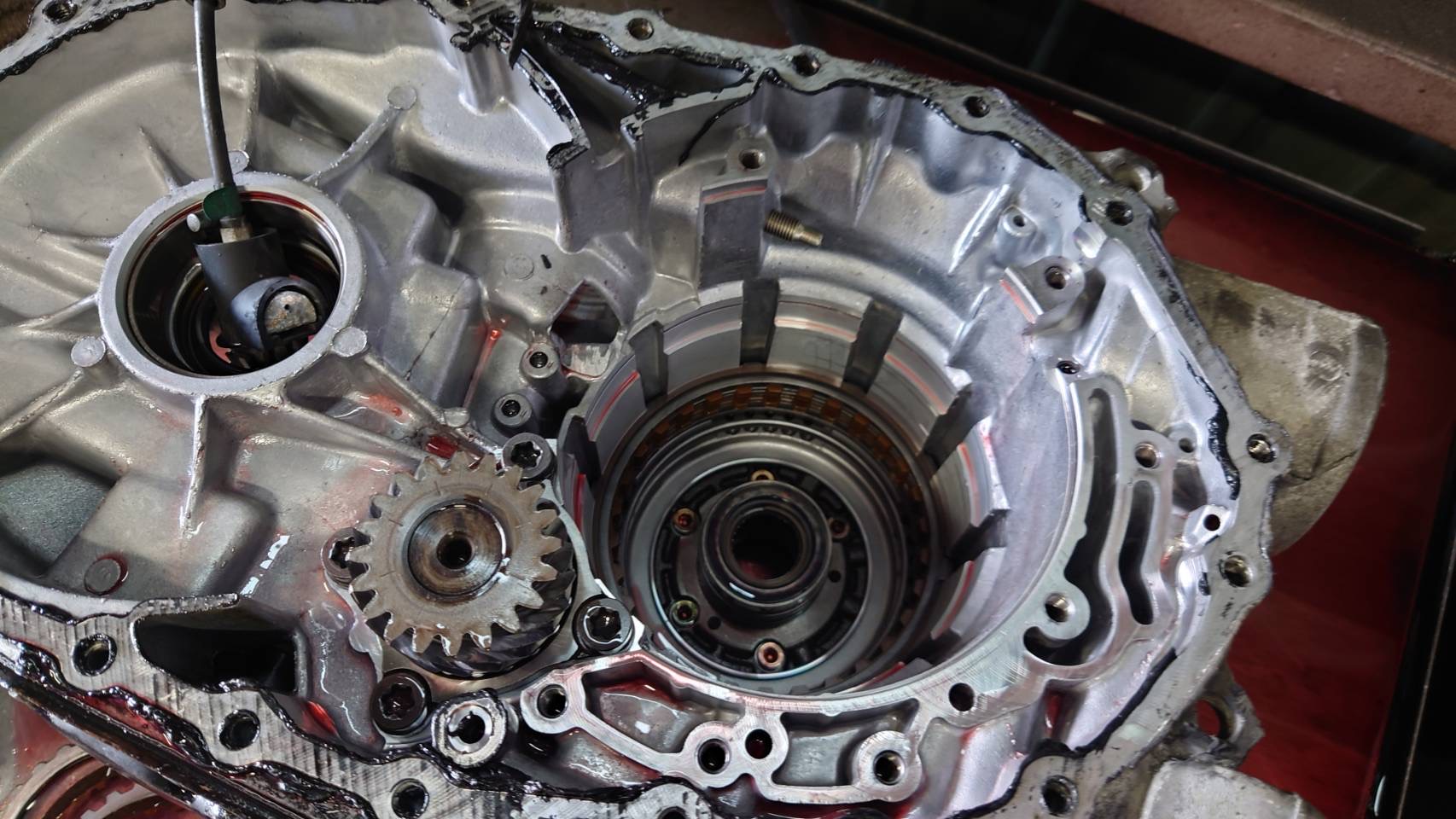
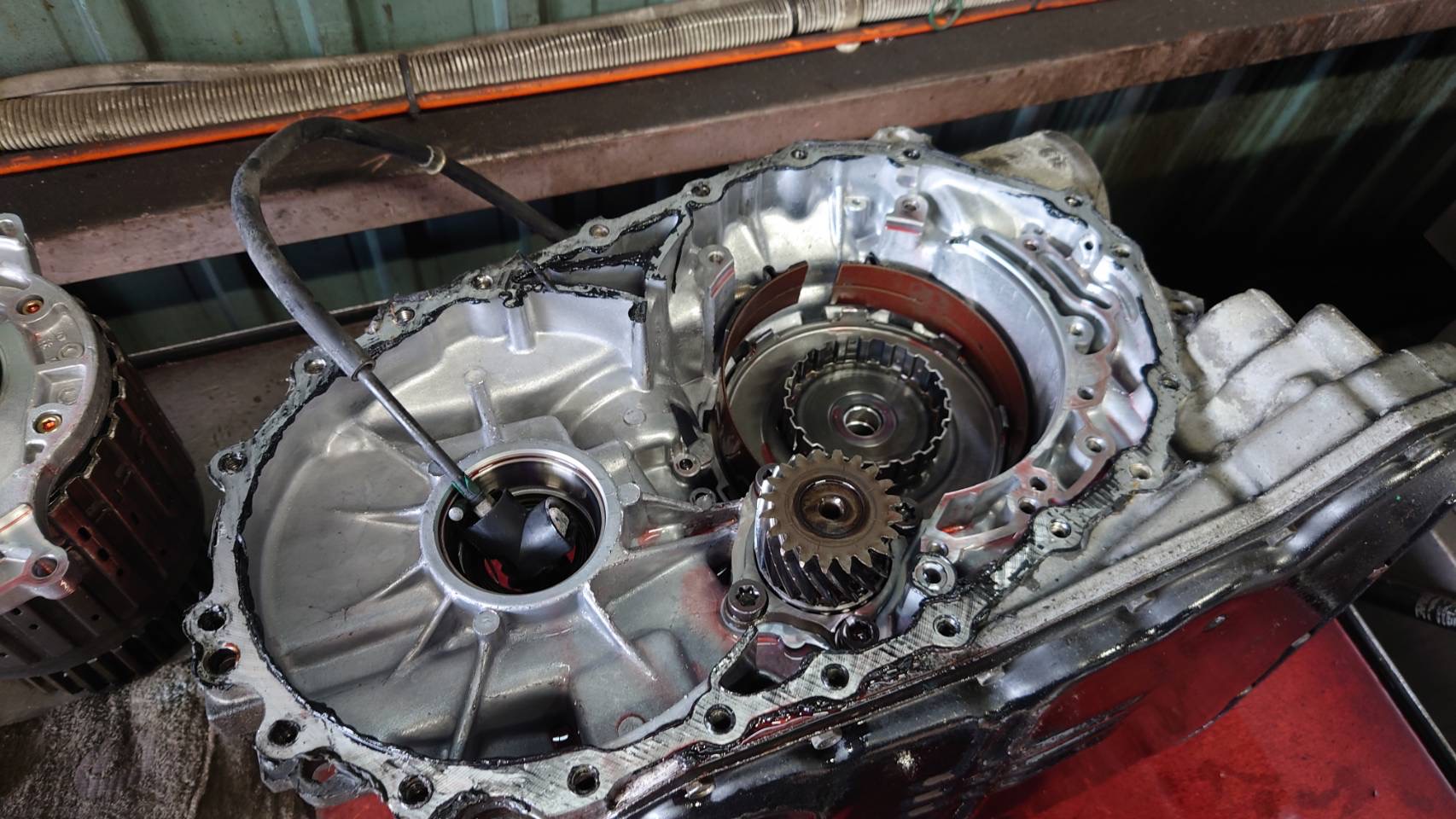
Drums, shafts, bearings and gears are removed in the correct sequence.
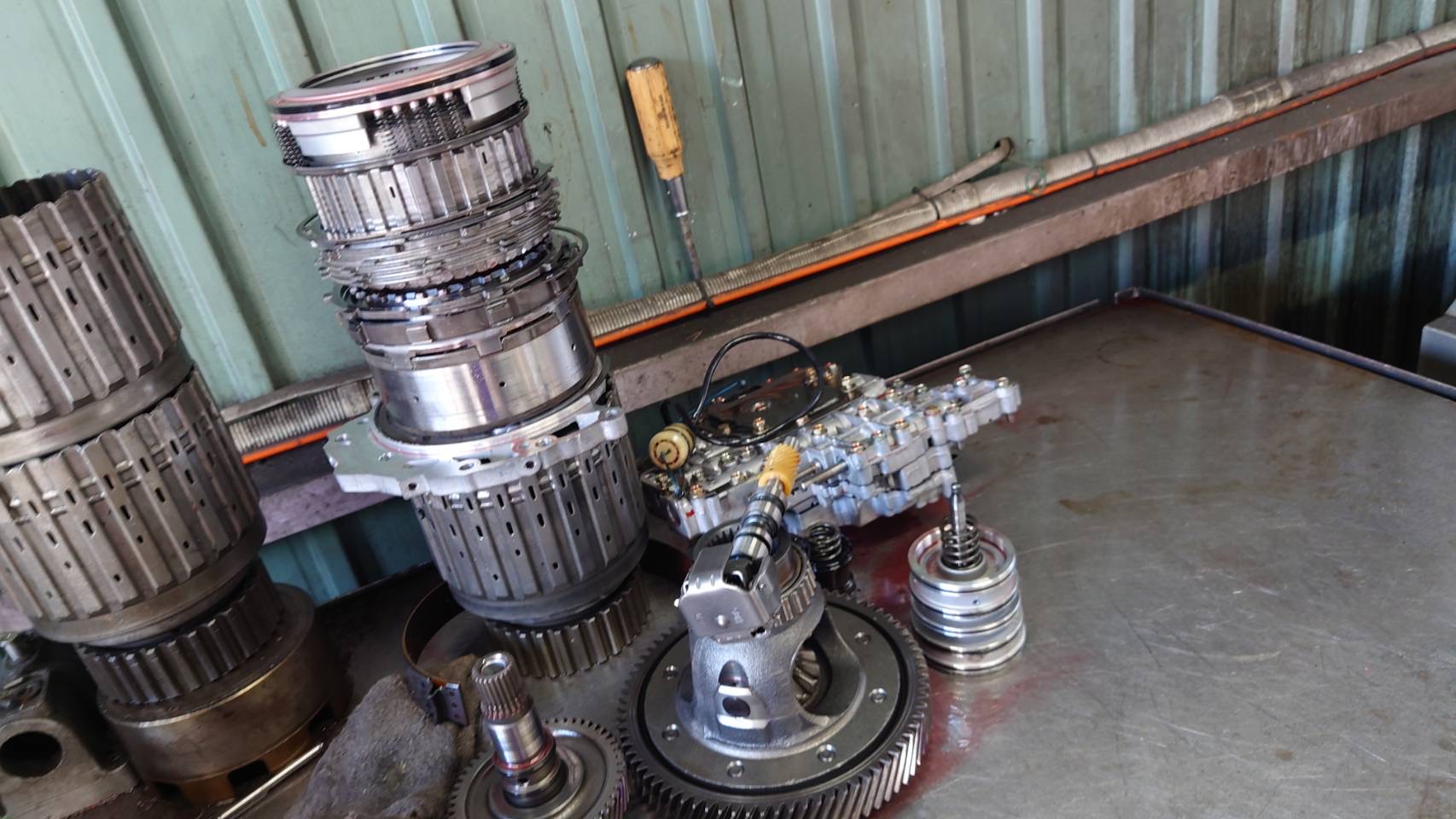
Every component works together with the surrounding parts.
For this reason, the transmission must be judged as one complete system—not as a collection of isolated components.
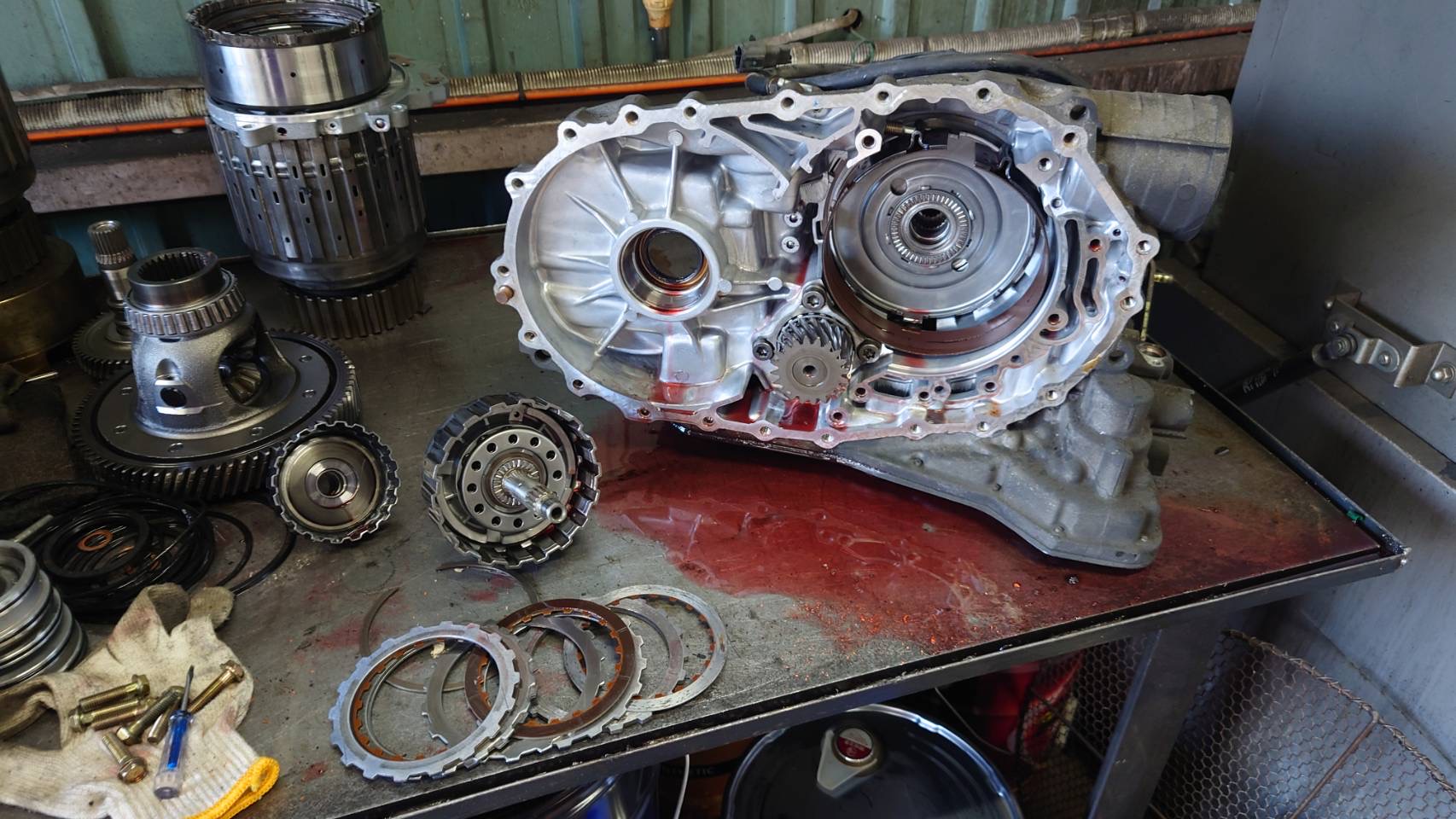
As the clutch assemblies are removed, the internal gear train and bearing areas become accessible
Differential and Final-Drive Inspection
The differential and final-drive components are also removed.
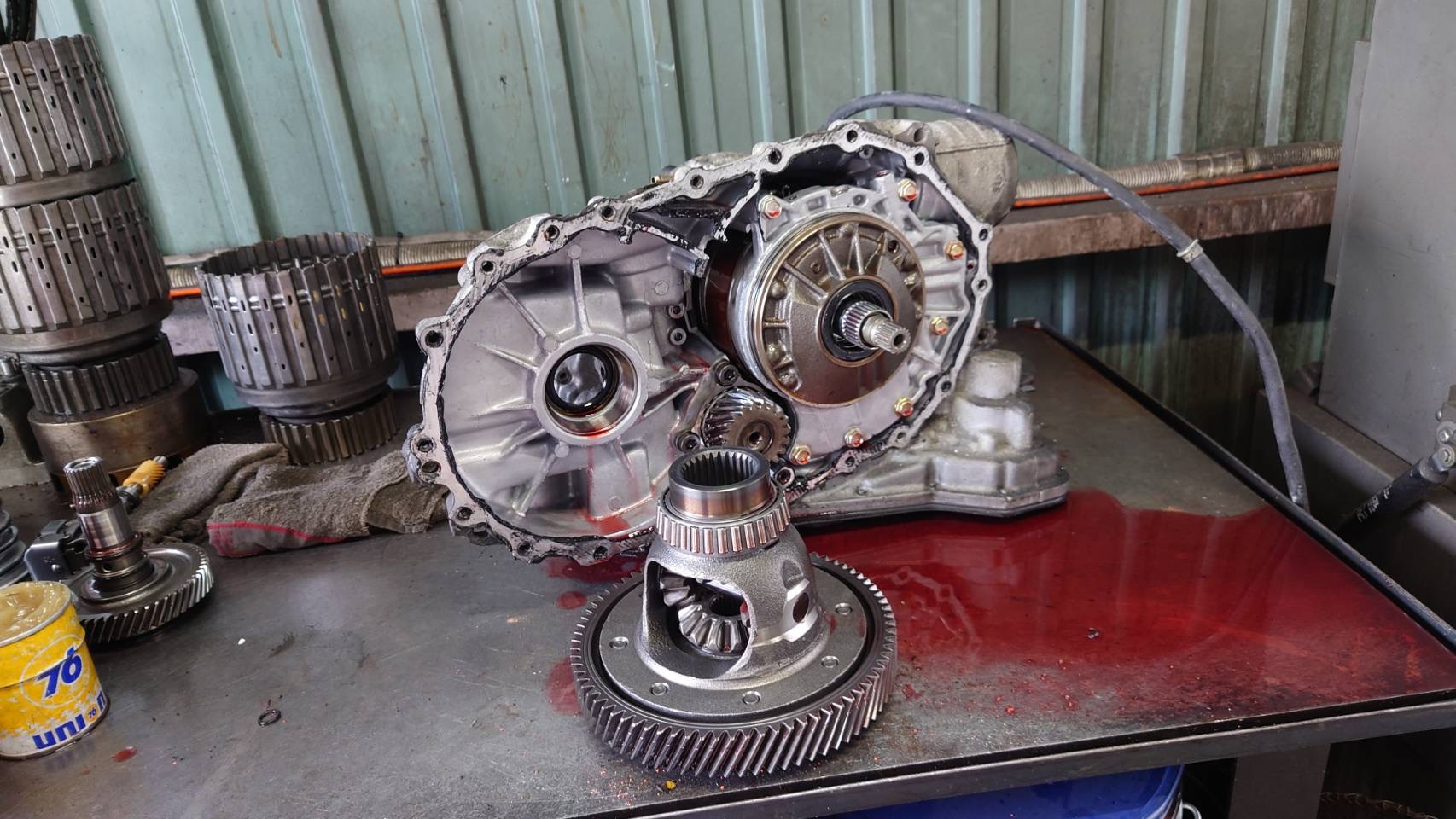
These components transfer power from the automatic transmission to the drive wheels.
Their gears, bearings and surrounding surfaces must be included in the inspection.
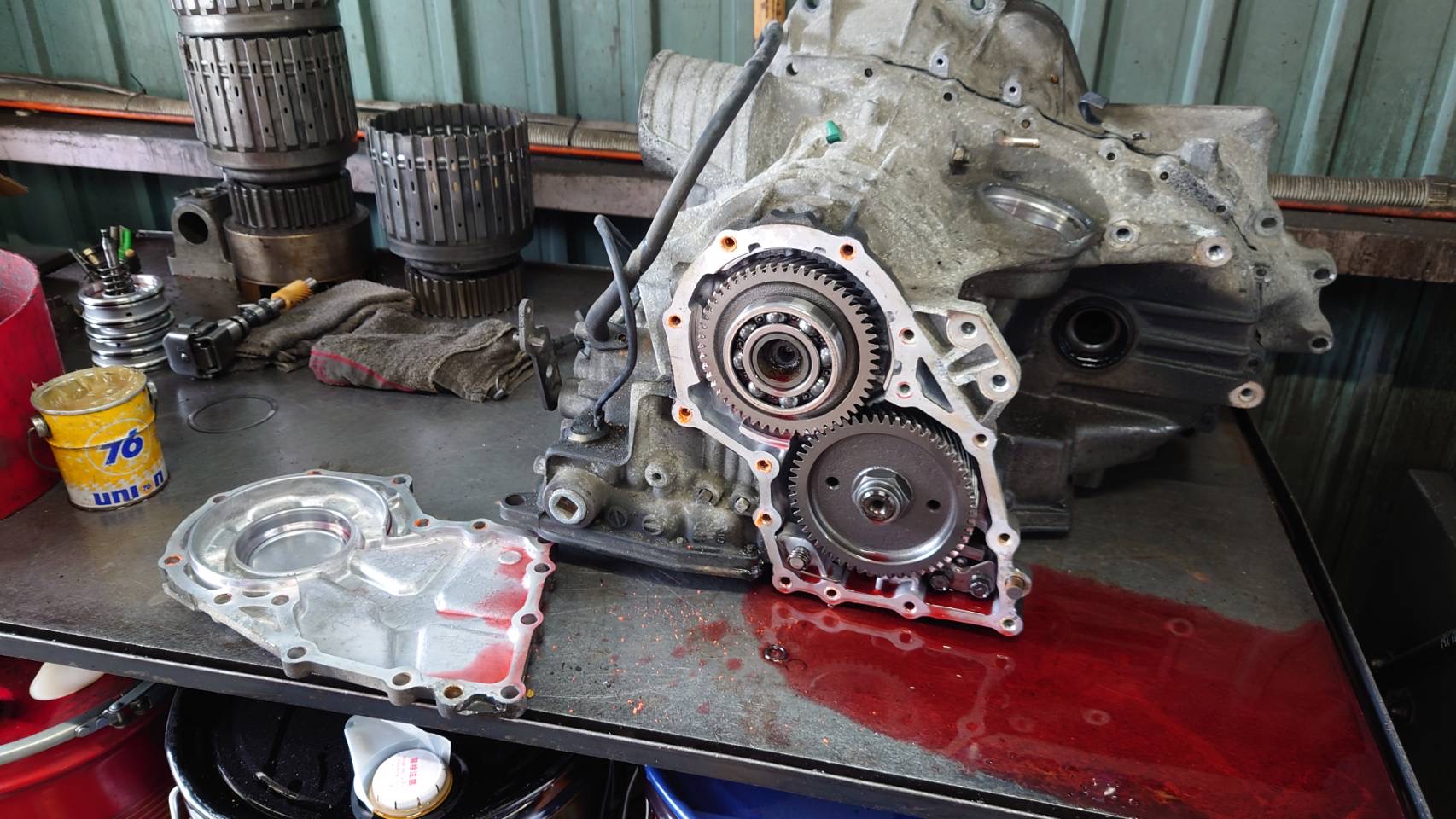
Control and actuation components are checked as part of the same internal service.
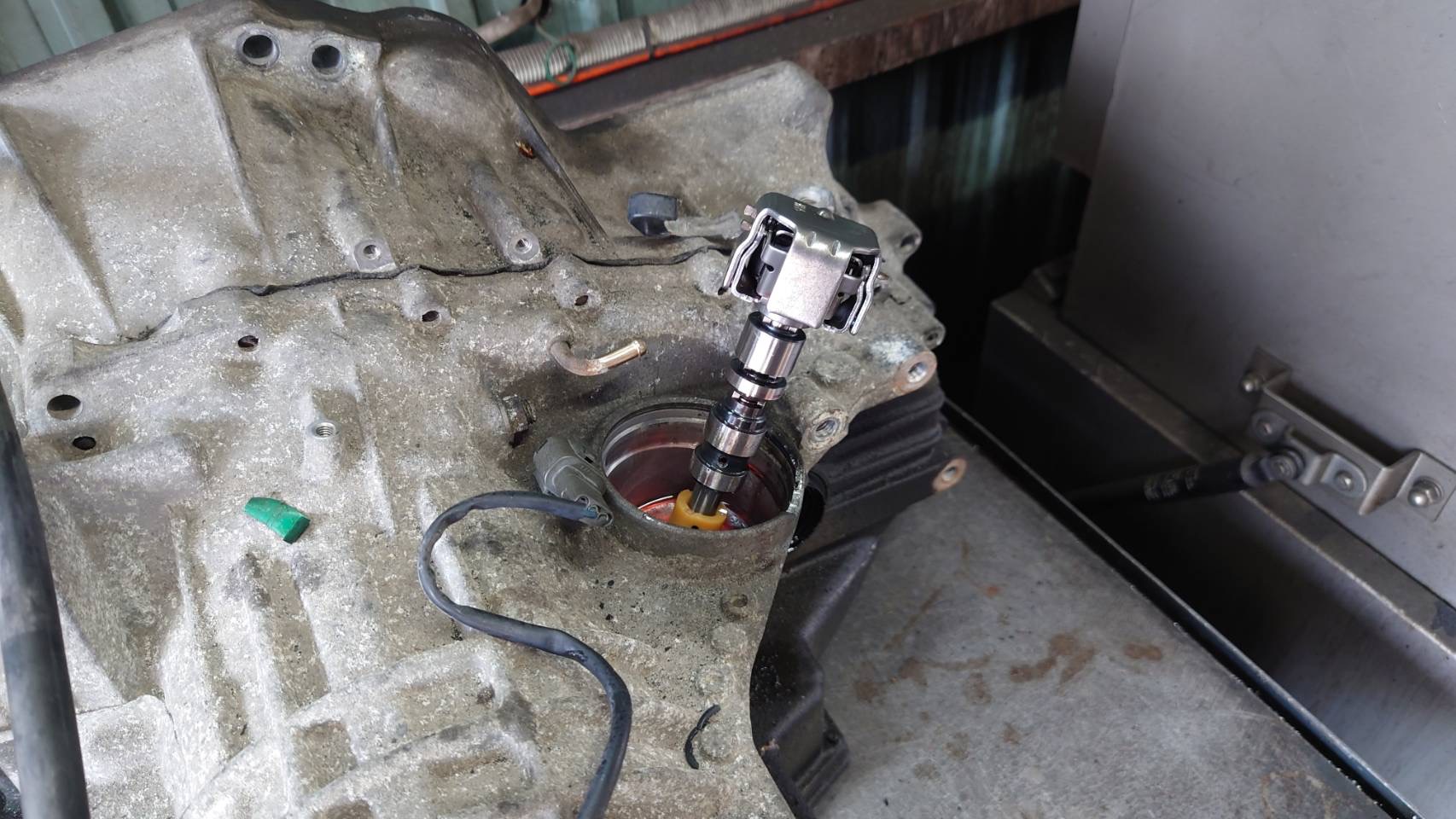
Why Not Simply Install Another Used Transmission?
Installing a used transmission can be faster and less expensive.
However, its internal condition and maintenance history are usually unknown.
A used transmission may have low mileage—or it may contain the same age-related deterioration as the transmission being replaced.
For a temporary repair, that risk may be acceptable.
For a high-quality Nissan Rasheen restoration intended for long-term ownership or overseas delivery, it is not always the right solution.
An overhaul makes it possible to:
* Inspect the transmission internally
* Check friction discs and steel plates
* Evaluate seals, bearings and hydraulic components
* Clean the transmission case and oil passages
* Inspect reusable gears and shafts
* Replace necessary wear components
* Keep photographic records of the work
The Most Important Work Is Often Hidden
Once the transmission is reassembled and installed, none of these internal components can be seen.
However, their condition influences every drive.
At Rasheen-kan, we do not believe a restoration should be judged only by its paint, wheels or interior.
A properly prepared Rasheen must be considered as one complete vehicle:
* Engine
* Automatic transmission
* Drivetrain
* Suspension
* Brakes
* Electrical system
* Body
* Paint
* Interior
Our objective is not to produce the cheapest Nissan Rasheen.
Our objective is to build a Rasheen whose mechanical condition, exterior design, interior and individual character have all been carefully considered.
For customers in the United States and other countries, this approach is especially important.
The vehicle should be prepared correctly in Japan before beginning its next life overseas.
Looking for a Restored Nissan Rasheen?
Tell us:
* Your country and state
* Preferred exterior color
* Preferred interior design
* Face style
* Intended use
* Required mechanical preparation
* Budget and delivery schedule
Rasheen-kan can discuss a custom-built Nissan Rasheen and international delivery from Japan.
Rasheen-kan Co., Ltd.
Nissan Rasheen Restoration and Custom Building
Established 2003
Japan