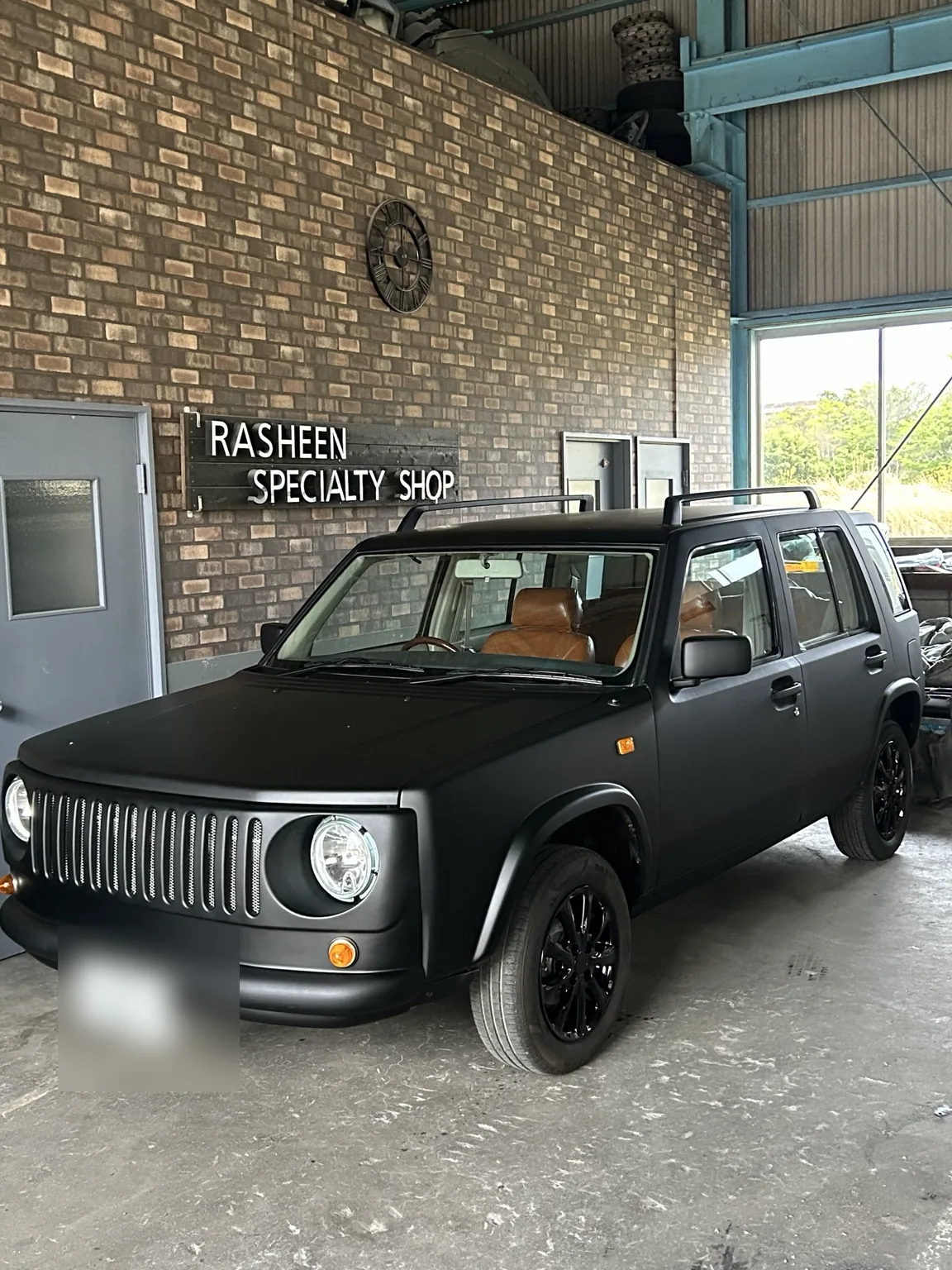
People who search for "Nissan Rasheen for sale USA" are usually comparing two very different buying options.
The first option is to buy a Rasheen that has already been imported, titled, and offered for sale inside the United States. The second is to choose a vehicle in Japan and arrange a one-of-a-kind restoration or custom build before export.
Both options can lead you the right Rasheen for what you want. However, the cost, selection, condition, documentation, and buying process can be very different.
This guide explains what American buyers should check before purchasing a Nissan Rasheen, how to compare U.S. inventory with vehicles in Japan, and what a properly documented, export-ready build should include.
Why American Buyers Are Looking for the Nissan Rasheen
The Nissan Rasheen offers something that is becoming difficult to find in a modern SUV.
It is compact, square, simple, and immediately recognizable. It has the personality of a 1990s Japanese vehicle without trying to look aggressive or oversized. Its friendly proportions fit in naturally anywhere—around town, at the beach, in the mountains, or at a local cars and coffee meet.
For many buyers, the appeal is not based on performance figures.
It is based on character.
A Rasheen feels different from the usual JDM sports car, full-size off-roader, or modern crossover. It is a practical classic for people who appreciate design, individuality, and the experience of driving something that is still uncommon on American roads.
Two Ways to Find a Nissan Rasheen for Sale in the USA
1. Buy a Rasheen That Is Already in the United States
Buying a vehicle that has already arrived in America can be the simplest option.
You may be able to inspect it in person, arrange a test drive, review its U.S. title, and take delivery without waiting for international shipping. This can be especially useful for a buyer who wants a Rasheen quickly and is satisfied with the vehicle's existing color, interior, condition, and specifications.
However, a U.S.-based location does not automatically mean that every important question has been answered.
Buyer's Quick Checklist:
• Whether the vehicle has a valid U.S. title
• Whether the original import documents are available
• Whether the manufacturing date has been documented
• Whether the engine remains in an acceptable configuration
• Whether underbody and rust-condition photos are available
• What mechanical service has actually been completed
• Whether repainting or customization was properly documented
A finished vehicle may look attractive in listing photos while still hiding old paint, corrosion, fluid leaks, worn suspension components, or complete mechanical preparation.
Ask to see more than the exterior.
2. Buy or Build a Nissan Rasheen in Japan
Ordering from Japan normally requires more planning, but it can provide a wider range of choices.
Instead of accepting whatever color and condition happens to be available in America, the buyer may be able to select a suitable base vehicle and discuss the build plan before the work begins.
Depending on the vehicle and budget, the plan may include:
• Exterior color
• Face style
• Interior materials and colors
• Wheels and tires
• Body and paint preparation
• Mechanical inspection
• Maintenance and replacement of worn components
• Underbody, engine bay, and workshop documentation
This option is especially attractive for buyers who want a Rasheen with a specific personality rather than an ordinary used vehicle.
The tradeoff is time. Vehicle selection, inspection, restoration, customization, export preparation, shipping, customs clearance, and state registration all need to be considered.
A trustworthy seller should explain each stage instead of promising an unrealistically fast delivery date.
Can a Nissan Rasheen Be Legally Imported into the USA?
Vehicle age is one of the first items that must be confirmed.
Under the current NHTSA HS-7 declaration, vehicles 25 years or older may qualify for importation on the basis of their date of manufacture. The exact manufacturing month and year should therefore be verified for the individual vehicle rather than relying only on a model-year description in an advertisement. [Learn more]
EPA requirements are separate from NHTSA safety requirements. EPA guidance for vehicles over 21 years old emphasizes that the engine should remain the same model and configuration as the engine that was originally installed from the factory, when using that age-based provision. Buyers should be particularly careful with engine-swapped or heavily modified vehicles.[Learn more]
Federal eligibility alone does not guarantee smooth registration in every state. Title, emissions, inspection, insurance, and registration requirements can vary by state, so the buyer should confirm the full process with a customs broker, importer, and the relevant state authority before purchasing.
This article provides general information and is not legal advice.
How Much Does a Nissan Rasheen Cost in the USA?
There is no single correct Nissan Rasheen price.
Two Rasheens from the same year can have very different values because of their mileage, body condition, corrosion, service history, interior condition, paint quality, customization, documentation, and location.
A low base-vehicle price in Japan rarely translates into a low total cost in the USA.
A realistic budget should consider:
1. The base vehicle
2. Pre-purchase inspection
3. Required maintenance and repairs
4. Body and paint work
5. Interior and exterior customization
6. Transportation within Japan
7. Export documentation and handling
8. Ocean freight and marine insurance
9. Customs, port, broker, and storage charges
10. Transportation from the U.S. port
11. State title, inspection, tax, and registration costs
This is why buyers should ask for an itemized estimate.
A cheaper vehicle that needs major mechanical and body work may ultimately cost more than a properly inspected vehicle with a higher initial price.
The most useful comparison is not:
Which Rasheen has the lowest advertised price?
The better question is:
What will this specific Rasheen cost after the agreed work, documentation, export preparation, shipping, and U.S. arrival expenses are included?
What Should You Inspect Before Buying a Nissan Rasheen?
A Nissan Rasheen is a modern classic. The condition of the actual car matters more than how appealing its listing photos look.
Manufacturing and Identity
Confirm the chassis information, manufacturing date, and available Japanese documentation. The information on the vehicle, documents, invoice, and export paperwork should be consistent.
Body and Underbody
Request clear photos of the roof, door openings, wheel arches, lower body, floor, suspension mounting areas, rear gate area, and underside.
Fresh paint should not be treated as proof that the body is healthy. Ask what preparation was completed before repainting and whether trim, lights, bumpers, doors, or other parts were removed.
Engine and Cooling System
Ask for cold-start video, engine bay photos, service notes, and information about visible leaks, unusual noises, overheating, or cooling-system work.
A compression test or a more thorough mechanical inspection may be useful when the vehicle's condition calls for a closer look.
Transmission and Drivetrain
The seller should explain how the vehicle drives and whether any transmission, driveline, or related service has been completed.
Words such as "checked," "serviced," "rebuilt," and "restored" should not be used interchangeably. Ask exactly what was inspected, repaired, or replaced.
Steering, Suspension, and Brakes
Rubber components, boots, joints, dampers, steering parts, brake components, and tires should be checked as part of preparation.
These areas may not be exciting in a sales photo, but they directly affect how an older vehicle feels on the road.
Interior and Electrical Equipment
Check the seats, dashboard, switches, gauges, windows, locks, air conditioning, lights, audio equipment, and interior trim.
For a custom interior, ask which parts are original, refinished, recovered, repaired, or newly made.
Stock Rasheen or Custom Build?
A stock vehicle can be the right choice when a fast turnaround, simplicity, and tighter budget are the priorities.
A custom build makes more sense when the buyer has a clear vision for the color, front design, interior, wheels, and overall character.
Rasheenkan Japan currently presents stock vehicles, build examples, and custom-order planning for overseas buyers. Availability, mileage, model year, and final specifications depend on the individual base vehicle. 
The three main Rasheenkan face styles are:
Retro Face
A warm and simple design with round headlights, a clean grille, and a timeless compact-SUV appearance. It pairs naturally with beige, ivory, green, and other softer exterior colors.
Adventure Face
A stronger and more rugged look designed for buyers who prefer black details, a roof rack, darker wheels, and a more outdoor-oriented presence.
Classic Truck Face
A vintage truck-inspired design that combines a stronger grille and chrome-style details with the compact proportions of the Rasheen.
These three styles are available as their own build styles on the site, letting the exterior, interior, color, and budget be planned together.[Learn more]
What Does “Restored” Really Mean?
The word "restored" is often used too lightly.
A vehicle should not be described as fully restored simply because it has new paint, seat covers, and wheels.
A proper description should separate the work into clear categories:
• Body and paint work
• Mechanical inspection
• Maintenance
• Parts replacement
• Interior refinishing
• Cosmetic customization
• Drivetrain repair or service
The buyer should receive an honest explanation of what was done and what was not done.
At Rasheenkan, the level of work depends on the condition of the base vehicle and the selected build plan. The workshop pages specifically avoid claiming that every vehicle is fully rebuilt unless that work has actually been performed. [Learn more]
That distinction is important when comparing different Nissan Rasheens for sale.
How the Japan-to-USA Planning Process Works
A clear process reduces confusion for both the buyer and the workshop.
Step 1: Inquiry
The buyer provides the destination state, preferred style, target budget, and desired timeline.
Step 2: Base Vehicle Selection
Available stock or suitable build candidates are discussed. Important details such as the manufacturing date, mileage, condition, and documentation are confirmed.
Step 3: Inspection
Photos, videos, underbody images, engine bay images, and workshop notes are prepared according to the vehicle and build plan.
Step 4: Build and Service
The agreed face style, paint, interior work, maintenance, and mechanical preparation are completed.
Step 5: Export Planning
The vehicle information, export documents, FOB Japan arrangements, and shipping coordination are prepared for the buyer and the parties handling U.S. importation.
This is the same basic five-stage process currently described on Rasheenkan's U.S. export page.[Learn more]
Questions to Ask Any Nissan Rasheen Seller
Before sending a deposit, ask the seller:
1. What is the exact manufacturing month and year?
2. Can you provide the chassis and export-document information?
3. Can I see current underbody and engine bay photos?
4. What mechanical work has actually been completed?
5. Has the vehicle been repainted, and are prep-and-paint photos available?
6. Is the original factory engine still installed, with no modifications or swaps?
7. What is included and excluded from the quoted price?
8. Who is responsible for shipping, customs clearance, and U.S. port charges?
9. Is this a vehicle in current stock, a candidate base vehicle, or only an example build??
10. What information will be provided to my broker or importer?
Clear answers are more valuable than broad promises.
Frequently Asked Questions
Can I buy a Nissan Rasheen that is already titled in the USA?
Yes. A U.S.-based vehicle may provide faster delivery and an opportunity for an in-person inspection. Review the title, import history, condition, and service documentation before buying.
Is it better to buy in America or order from Japan?
Buying in America is usually simpler and faster. Ordering from Japan can offer more choice, along with the opportunity to plan the color, styling, interior, and preparation in advance. The best option depends on your timeline, budget, and preferred build.
Are Nissan Rasheens right-hand-drive?
Japanese-market Rasheens are right-hand-drive vehicles. Buyers should be comfortable with right-hand-drive ownership and confirm insurance, inspection, and registration requirements in their state.
Can I choose my own color and interior?
A custom build may allow the buyer to select an exterior color, face style, seat upholstery, interior colors, wheels, and finishing touches. The final options depend on the base vehicle, parts availability, budget, and build plan.
How long does it take to receive a Rasheen from Japan?
The timeline depends on base-vehicle availability, inspection findings, the amount of restoration or customization, shipping schedules, port procedures, and customs clearance. Request a realistic estimated schedule for each stage rather than relying on one guaranteed delivery date.
Find the Right Nissan Rasheen for Your Build
The right Nissan Rasheen is not necessarily the cheapest vehicle or the one with the most dramatic listing photos.
It is the vehicle with the right condition, clear documentation, and an appropriate build plan—alongside honest communication from the seller.
Tell Rasheenkan Japan your preferred face style, budget range, destination state, and target timeline. We can discuss current stock, suitable base vehicles, restoration options, custom-build planning, workshop documentation, and FOB Japan export preparation.
Start your Nissan Rasheen USA inquiry and build a compact JDM SUV with real character.